This HVAC filter has an arrow. It actually matters.
Putting an air filter in backward chokes your blower motor, bends the frame, and lets dust bypass directly into your evaporator coils.

WHAT IS THIS?
HVAC filters have structural wire reinforcement on one side designed to support the pleated media against air pressure.
When your furnace or air conditioner runs, the blower fan creates a strong vacuum, pulling air from your rooms through the return vents, through the filter, and into the air handler.
The printed arrow on the filter frame indicates the DIRECTION AIR IS TRAVELING—not the direction you are sliding the filter into the slot.
WHY SHOULD I CARE?
When installed backward, the weak side of the filter faces the suction force. The media bows inward, tearing away from the cardboard frame.
Unfiltered air then bypasses the filter entirely, coating the wet indoor evaporator coils with sticky dust and mold that requires professional chemical cleaning.
WHAT SHOULD I DO?
Inspect your filter right now. Look at the arrow and compare it to the direction of ductwork traveling into the furnace.
WHAT TO DO NEXT
ACTION RULEYOUR 5-MINUTE CHECKLIST:
- Check filter size stamped on the frame (e.g., 16x25x1).
- Draw a permanent arrow on your furnace ductwork with a Sharpie.
- Set a calendar recurring reminder every 90 days (every 30-60 if you have pets).
“Air always travels FROM the return duct (from your living space) INTO the furnace/blower. The arrow MUST point toward the blower.”
- •Residential HVAC Filtration Guide(Air Conditioning Contractors of America (ACCA))
- •Indoor Air Quality and Filter Maintenance(U.S. Department of Energy (DOE))
HOW MUCH OF ADULT LIFE CAN YOU HANDLE WITHOUT GOOGLING IT?
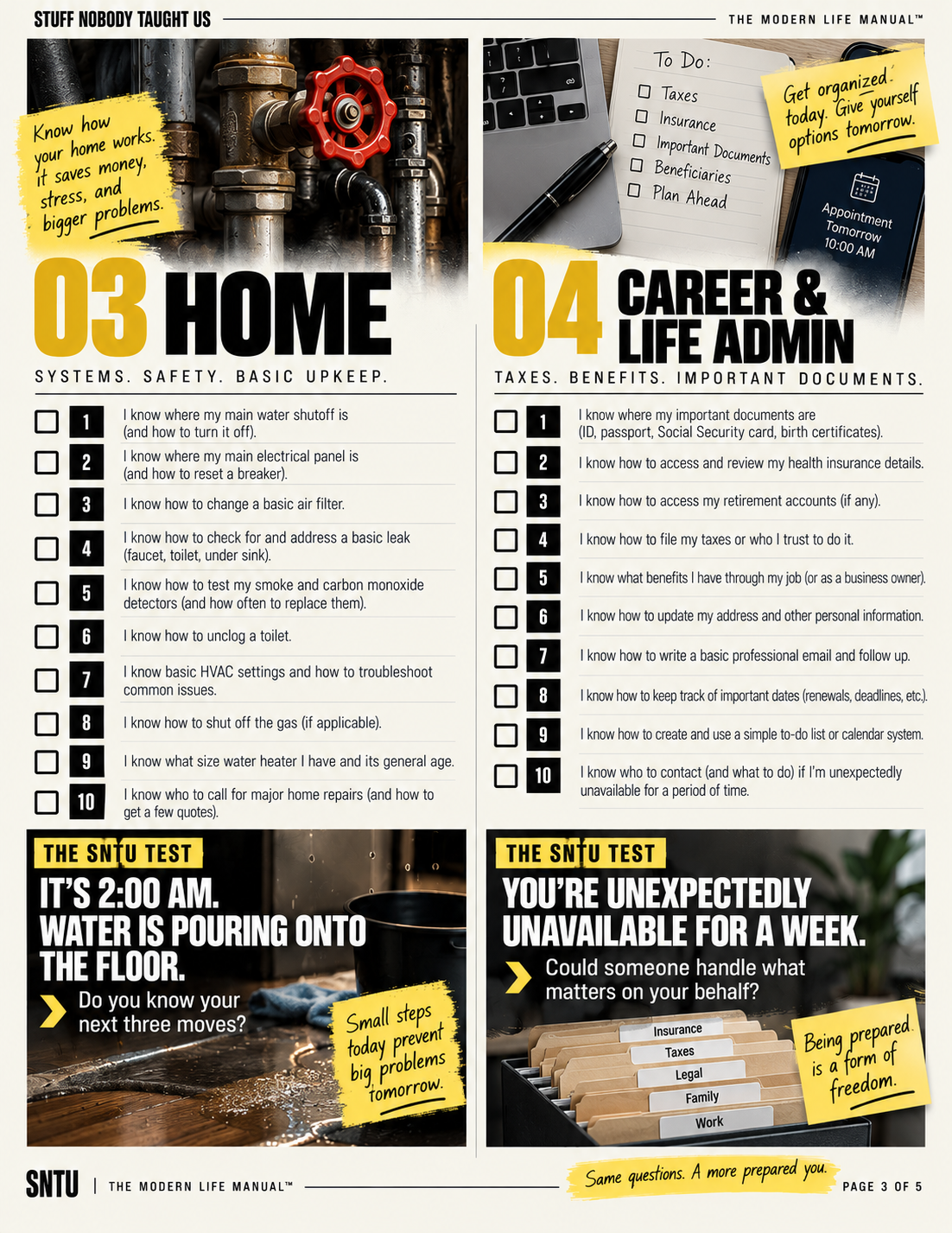
Download The “I Should Probably Know This” Checklist. 50 things every adult should know how to find, check, understand, or do across Money, Cars, Home, Life Admin, and Preparedness.
RELATED FIELD MANUALS
If a pipe bursts tonight, do you know how to stop the water?
Water damage causes thousands in damage within minutes. If you have to search for the shutoff valve while water is shooting through your ceiling, you're already too late.

Same little check-engine symbol. Different urgency.
A steady yellow check engine light vs. a flashing check engine light mean two completely different things. One gives you a week; the other can melt your engine in two miles.
Smoke alarms have an expiration date stamped on the back.
Changing the 9-volt battery doesn’t fix an expired sensor. The radioactive or photoelectric detection chamber inside breaks down after 10 years.