Your credit card shows two balances. Which one do you actually pay?
Current Balance vs. Statement Balance. Paying the wrong one either costs you accidental interest or wastes cash flow you didn't need to surrender yet.
WHAT IS THIS?
Credit card statements snapshot your charges at a closing date. You have two distinct numbers on your banking screen.
The Statement Balance is the total amount owed on the specific day your billing cycle closed (usually 21 to 25 days before your payment is due).
The Current Balance includes that Statement Balance PLUS every transaction you made between the statement closing date and today.
WHY SHOULD I CARE?
Many people believe they have to pay the 'Current Balance' to avoid interest. Doing so gives the bank an interest-free loan with your cash earlier than necessary.
Worse, others pay the Minimum Payment thinking they are 'doing fine', which allows daily compounding interest to spiral into thousands of dollars in pure bank profit.
If you carry a balance from month to month, your grace period is eliminated. Interest accrues from the exact second you swipe your card until the balance is completely zeroed out over two consecutive statement cycles.
WHAT SHOULD I DO?
Set your card's auto-pay to 'Full Statement Balance'—not Minimum, and not Current Balance.
WHAT TO DO NEXT
ACTION RULEYOUR 5-MINUTE CHECKLIST:
- Check all active credit cards right now.
- Confirm whether auto-pay is set to Minimum or Statement Balance.
- Verify your payment due dates and align them with your payroll deposit schedule.
“Always pay 100% of the Statement Balance before the Due Date. Never carry a balance thinking it 'builds credit'—that is a persistent myth that costs Americans billions every year.”
- •Consumer Financial Protection Bureau (CFPB) Credit Card Regulations(Truth in Lending Act (Regulation Z))
- •Credit Card APR & Grace Period Standards(Federal Reserve Consumer Handbook)
HOW MUCH OF ADULT LIFE CAN YOU HANDLE WITHOUT GOOGLING IT?
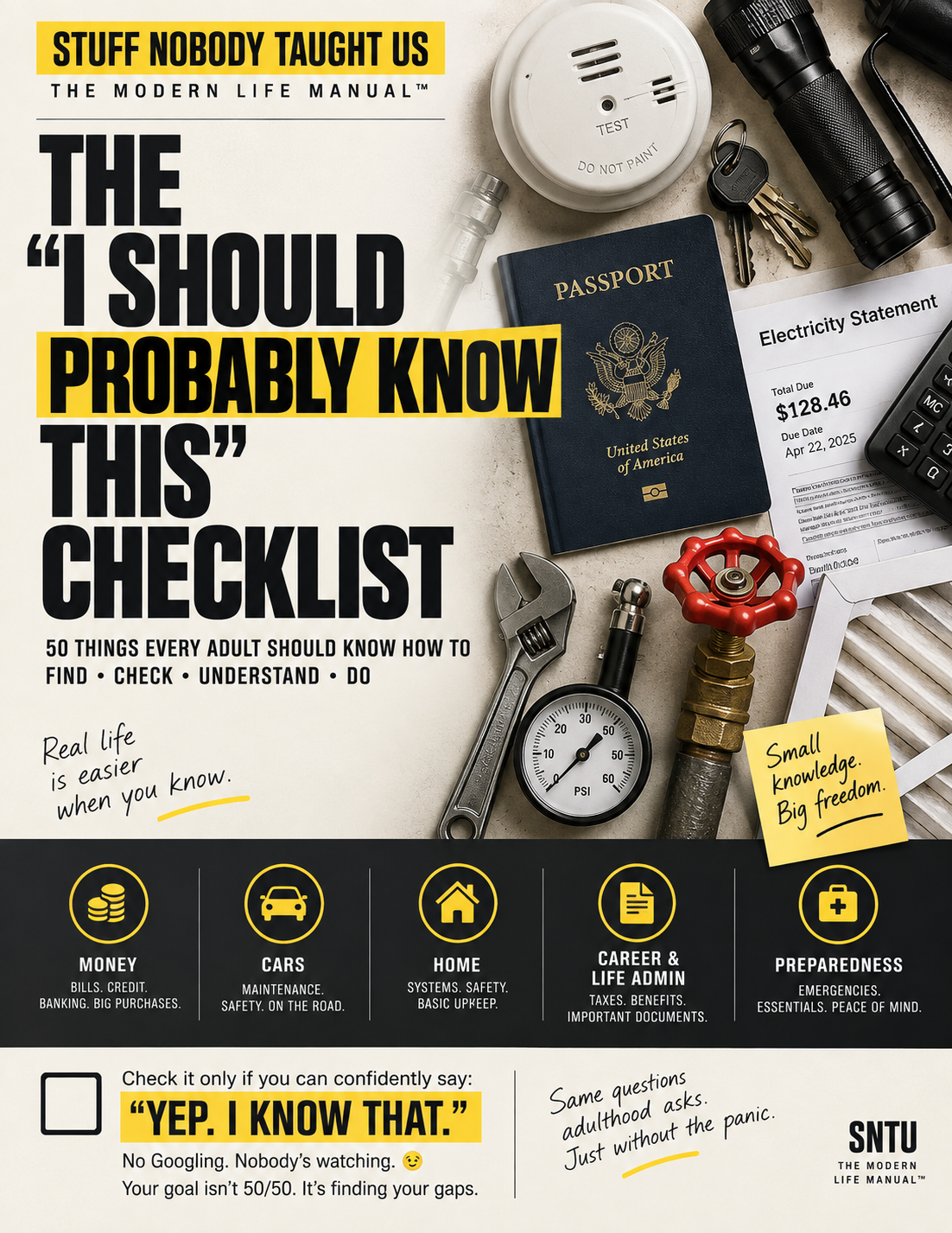
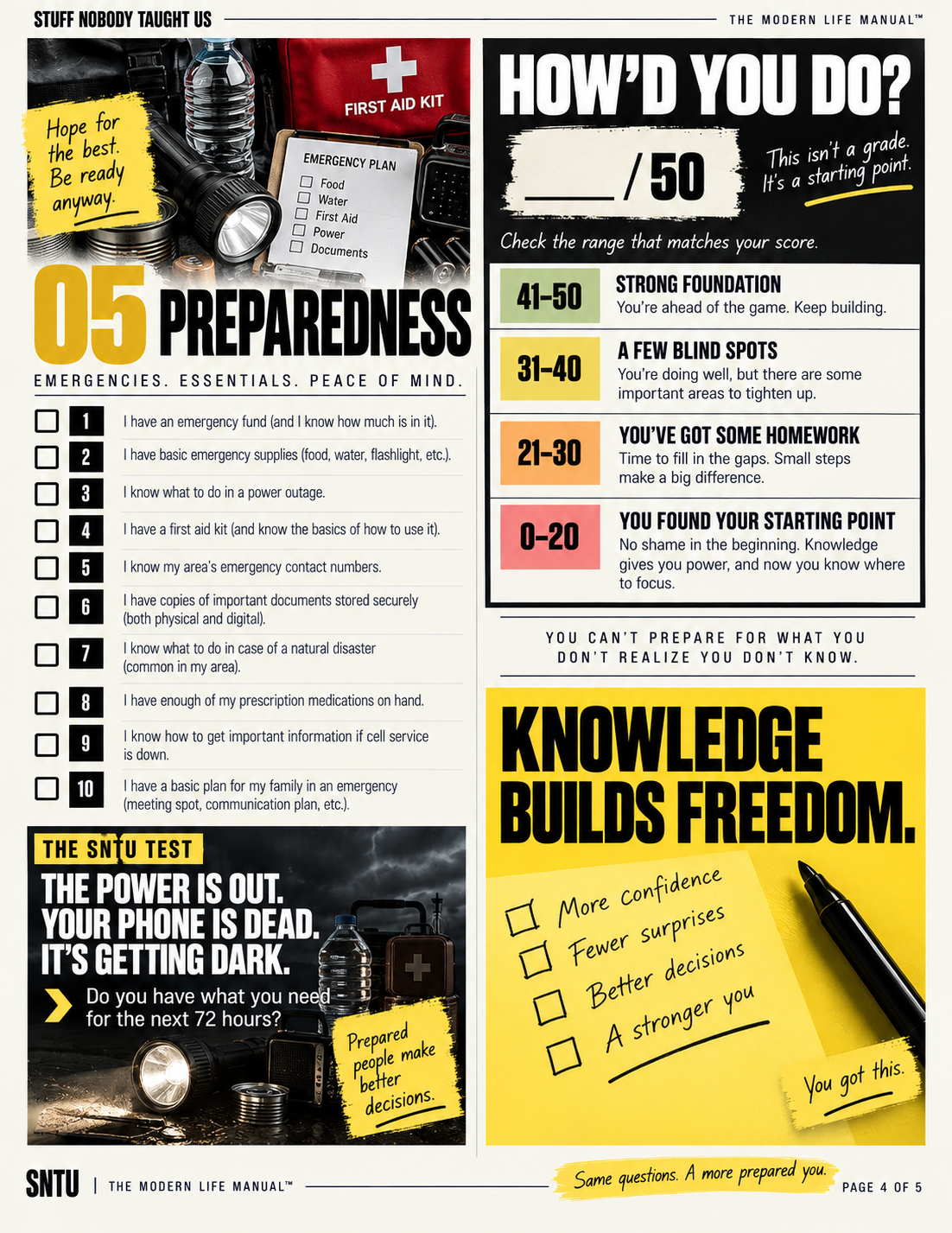
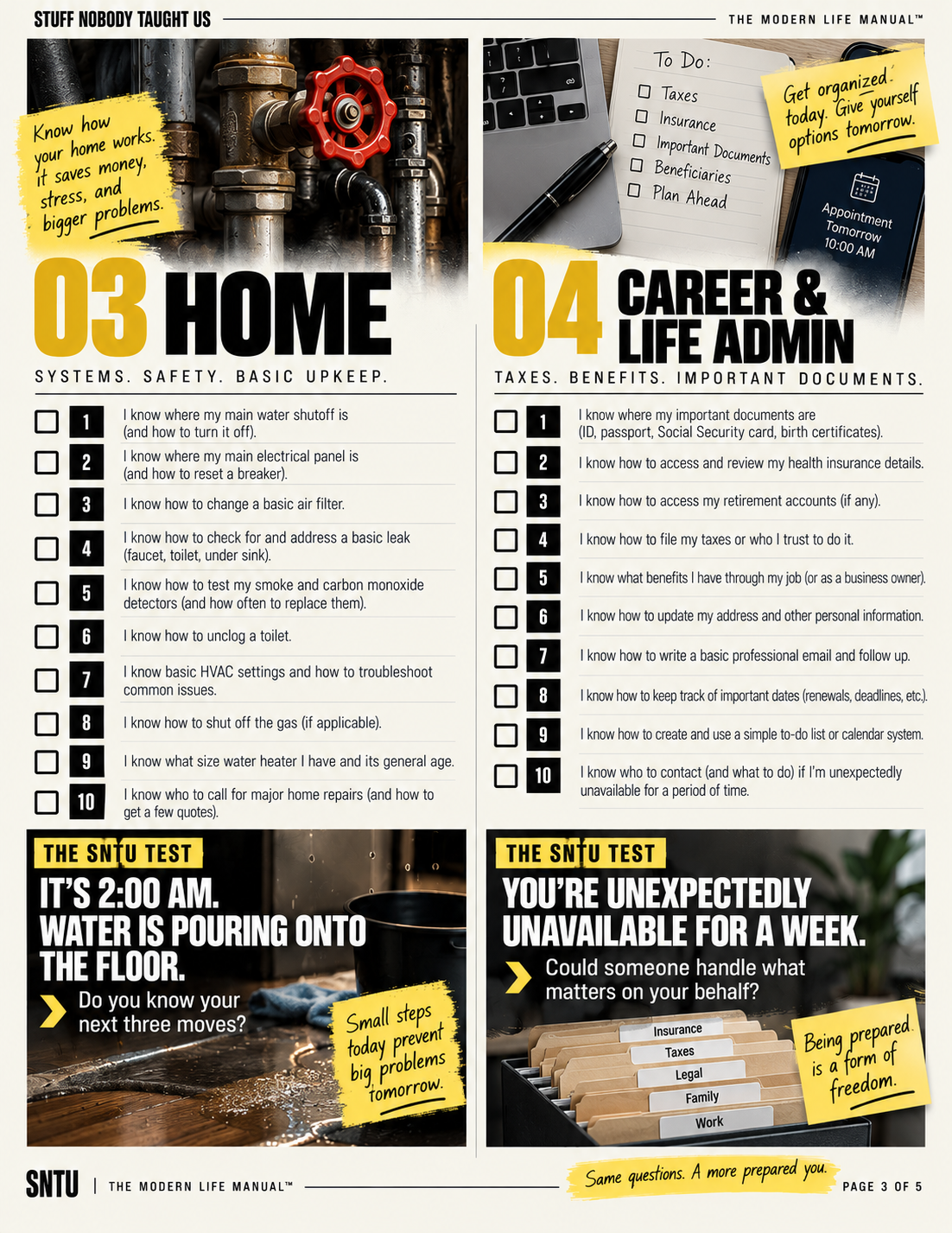
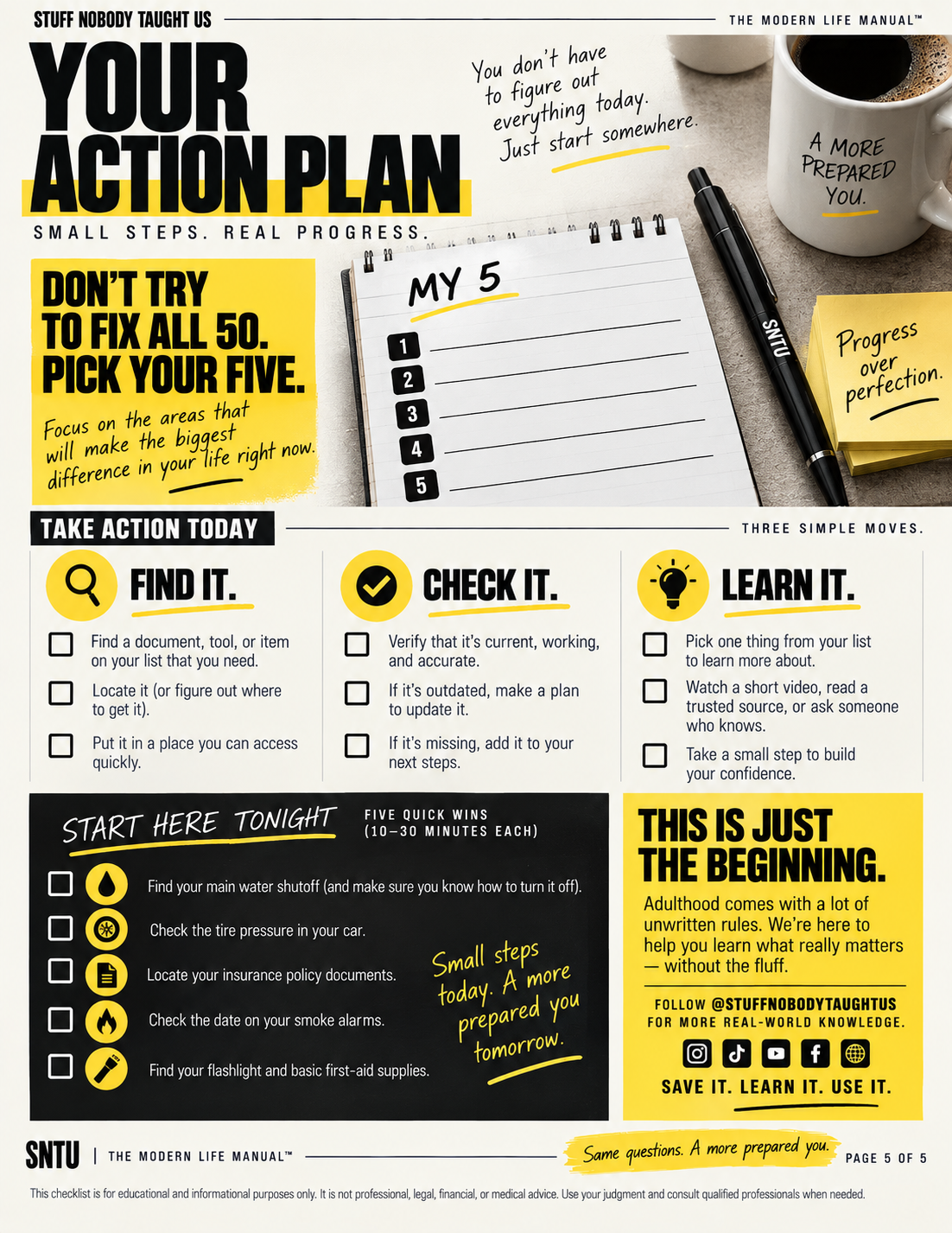
Download The “I Should Probably Know This” Checklist. 50 things every adult should know how to find, check, understand, or do across Money, Cars, Home, Life Admin, and Preparedness.
RELATED FIELD MANUALS
If a pipe bursts tonight, do you know how to stop the water?
Water damage causes thousands in damage within minutes. If you have to search for the shutoff valve while water is shooting through your ceiling, you're already too late.
A lower monthly car payment can cost you more.
The dealership finance office loves stretching your loan from 48 months to 84 months. Your payment drops $60 a month, but you pay $7,400 more in interest and end up underwater.
Actual Cash Value vs. Replacement Cost: The fine print on your policy.
If your 8-year-old roof or 5-year-old television is destroyed, ACV pays what a used, depreciated item is worth on Craigslist. Replacement Cost pays what it costs to buy a brand new one today.